


Karnataka is one among the most drought-prone states in India, with 16 of the 24 most drought-prone districts. The vulnerability of the state has increased significantly in recent years, with 156 taluks, declared drought-hit in 2018-19. Reports from KSNDMC (2017) indicate a rise in the frequency and severity of drought-affected areas, underscoring the urgency of water management interventions.
Among them, Kolar, Chikkaballapur, Bengaluru rural and Anekal (part of the Eastern Dry Agroclimatic Zone) are classified as permanently drought-prone, highlighting the region’s chronic water scarcity.
This region experiences low and erratic rainfall (often below 750 mm annually), high evaporation rates, and heavy groundwater depletion. Groundwater, once the lifeline of these areas, is now heavily depleted, with borewell depths exceeding 1,000 feet, making extraction costly and unreliable. The decline of traditional tanks, erratic rainfall (often below 750 mm annually), and high evaporation rates have further exacerbated the crisis. Meanwhile, rapid peri-urban expansion has intensified water demand, forcing residents to rely on expensive private tankers and RO vending machines, paying INR 5 per 20 litres for drinking water.
In this context, shallow aquifers present a critical opportunity for water resilience. Historically, India’s water heritage—from the Kuls and Step Wells of the West to the Kalyanis and Pushkaranis of the South—was deeply rooted in managing and sustaining shallow groundwater sources. These systems, maintained by communities and skilled well-diggers like the Mannu and Kallu Vaddars, ensured decentralised and sustainable water access. However, as cities urbanise, open wells have fallen into disrepair, buried under waste or lost to real estate pressures.
As part of the Shallow Aquifer Management (SAM) initiative under AMRUT 2.0, Biome Environmental Trust, in collaboration with IISc, is spearheading research-backed interventions supported by a ₹3 crore DST grant. This initiative not only addresses immediate water shortages but also lays the groundwork for sustainable urban water management, ensuring long-term resilience against climate-induced water stress in semi-arid regions.
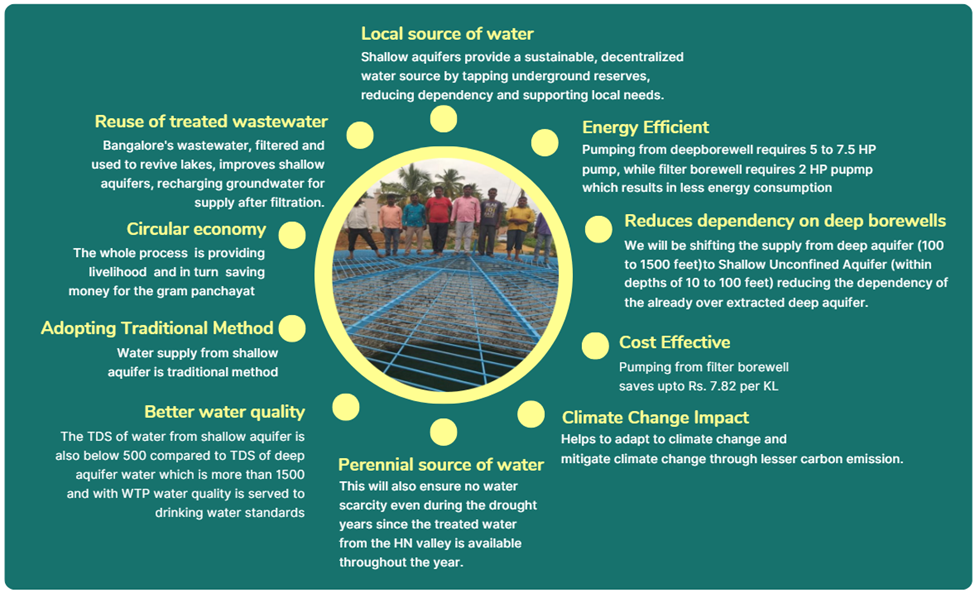
Biome Environmental Trust has been working to reverse this trend by integrating shallow aquifers into urban water management. This proposal builds on Biome Environmental Trust’s Integrated Urban Water Management approach in Devanahalli, Karnataka, where treated wastewater from Bengaluru and rainwater recharge a shallow aquifer (via a lake) meets 12% of water needs for 40,000 people (as of Dec 2024). Revived open wells and shallow filter borewells supply water treated to BIS-10500 standards, demonstrating local reuse’s viability and community and local government acceptance. This is India’s first initiative incorporating shallow aquifers into formal water supply systems using Soil Aquifer Treatment (SAT), a model that could be expanded to meet full water demand while reducing reliance on deep borewells and high-energy extraction.
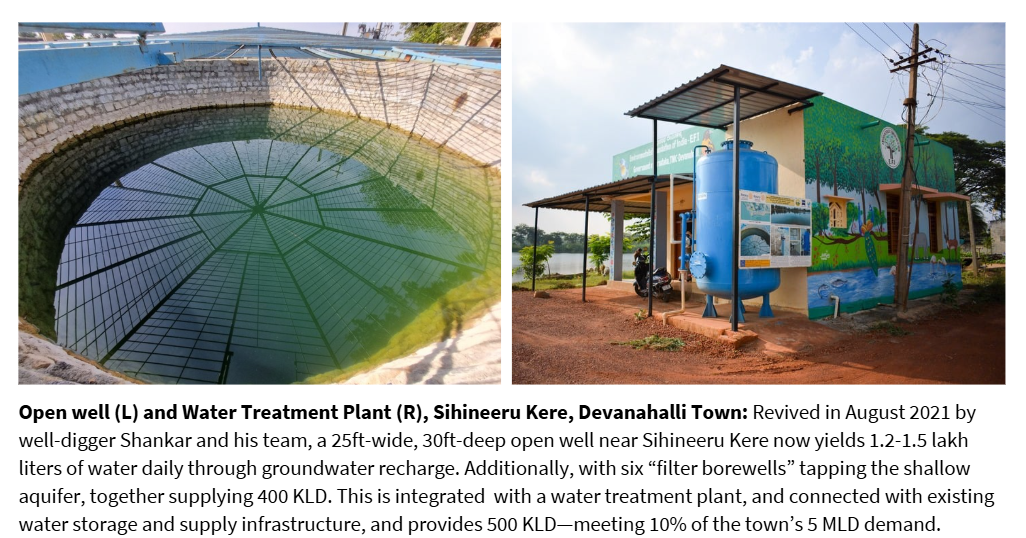
Fig 1. Integrating shallow aquifers for urban water supply in Devanahalli town
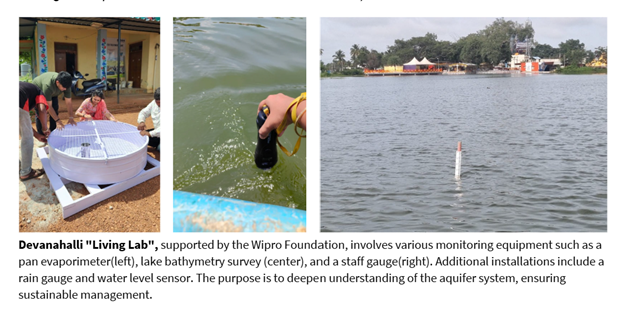
Fig 2. Activities under Devanahalli “Living Lab”
Given the growing impacts of climate change and worsening drought conditions, restoring shallow aquifers is not just a conservation effort—it is a strategic necessity. An open well, full of safe water, is a sign of a well-managed city, offering the lowest economic cost, the least carbon emissions, and a tenth of the energy required for deep borewell extraction. By reclaiming open wells and digging recharge structures, we can create a decentralised, climate-resilient water strategy, ensuring long-term urban and rural water security.
To enhance water resilience, the initiative aims to treat and reuse wastewater to recharge shallow aquifers, restore traditional water sources like open wells and filter borewells, and integrate them into municipal supply systems.


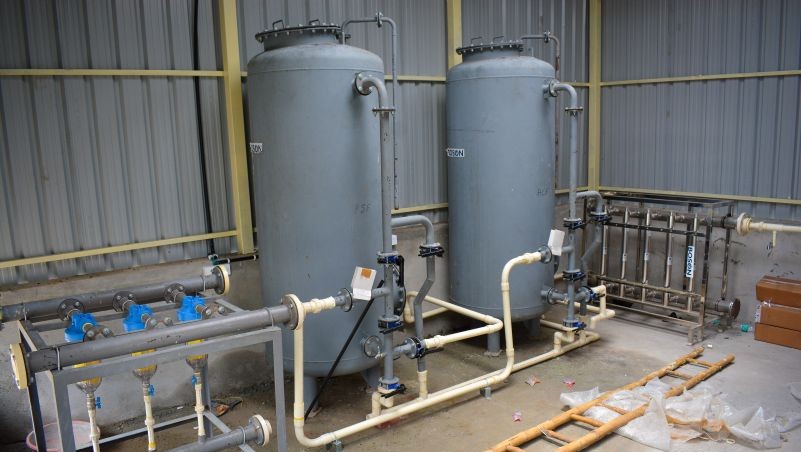
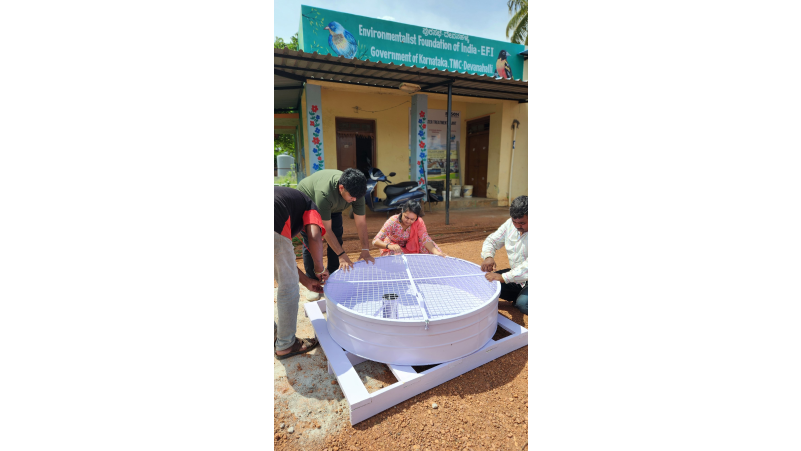


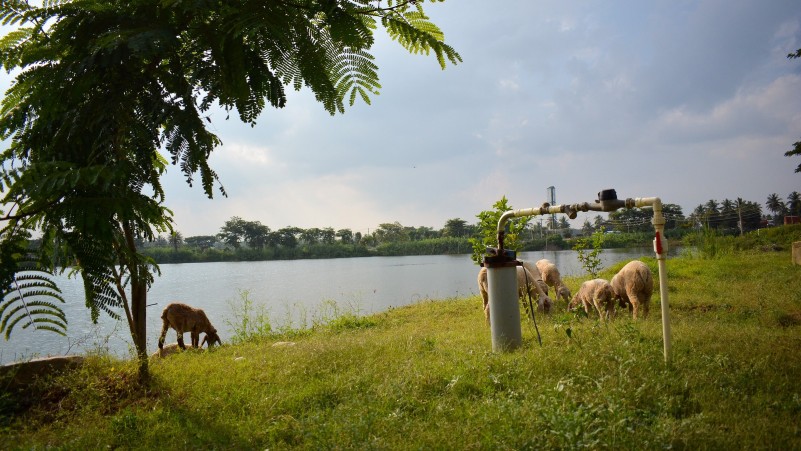
The primary objective is to enhance water security and climate resilience by leveraging treated wastewater to recharge shallow aquifers and sustainably augment municipal water supplies. Specific goals include:
- Revive and integrate open wells, kalyanis, and new shallow filter borewells into town water supply systems, ensuring adequate water treatment as necessary.
- Mitigate contamination risks by managing local wastewater and solid waste effectively, by reuse in agriculture/recharge.
- Promote rainwater harvesting to enhance groundwater recharge in collaboration with the resident communities.
- Develop a replicable model for sustainable urban water management that combines hydrological insights, community engagement, and technical interventions.
- Advocate for scaling this model to other towns and integrating it into government policies.
Biome’s earlier work, including the ‘Million Wells Campaign’ and collaborations with thinktanks like ACWADAM, has highlighted the importance of shallow aquifers in national discourse. This has led to their inclusion in the AMRUT 2.0 initiative through the “Shallow Aquifer Management” (SAM) project, which aims to integrate shallow aquifers into urban water management across ten cities, including Bengaluru. As national knowledge partners, Biome and ACWADAM offer technical expertise and capacity-building support. Biome’s founder trustee serves as an advisor to the SAM project, positioning the organisation to advocate effectively for policies that enhance climate resilience in urban water management.
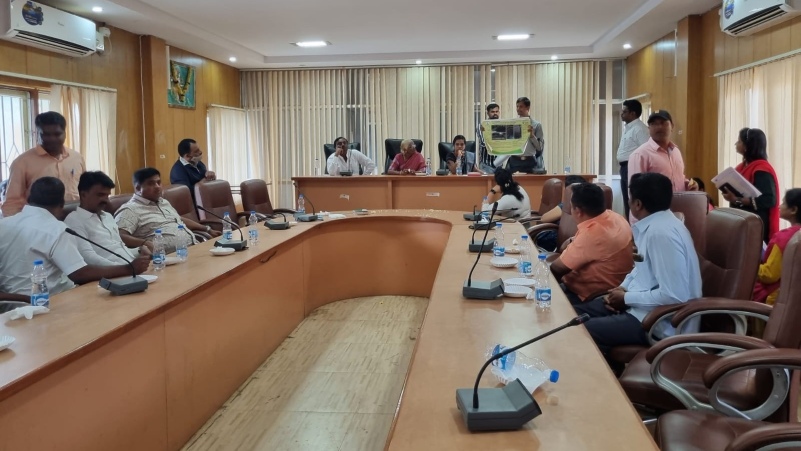
Biome Environmental Trust has a proven track record of delivering innovative and sustainable water management solutions that address water scarcity and sanitation challenges across rural and urban settings. Our Shallow Aquifer Management (SAM) project, successfully demonstrated in Devanahalli, integrates shallow aquifers into local water systems by recharging them with treated wastewater, providing a climate-resilient and cost-effective alternative to deep borewells. This initiative has been co-financed by the Devanahalli Town Municipal Council and has set a benchmark for scalable water security solutions in Karnataka. The project’s success earned recognition from the Karnataka Rural Development and Panchayat Raj (RDPR) Department at the Karnataka Rural Water and Sanitation Sustainability Summit, where Biome was awarded a Rs. 25 lakh grant to replicate this model in Doddajala Panchayat and extend it to other districts across the state.
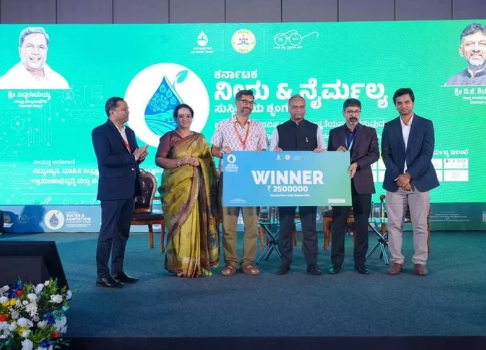
Fig. Biome receiving the award at Karnataka Rural Water and Sanitation Sustainability Summit
Under the leadership of S. Vishwanath, a founding trustee and one of India’s foremost water management experts, Biome has established itself as a trusted technical advisor for key national and state-level water initiatives, including:
Contributions to water management byelaw initiatives undertaken by the BWSSB Technical Committee in Bengaluru.
AMRUT 2.0 under the Ministry of Housing and Urban Affairs, Government of India, for the SAM project.
Jal Jeevan Mission (JJM) and Swachh Bharat Mission (SBM) in Karnataka under the RDPR Department.
Biome’s unique approach integrates participatory community engagement, innovative financing, and evidence-based solutions to create impactful, scalable models. With a strong foundation of technical expertise and collaborative success, Biome is well-positioned to partner with USAID to implement transformative, climate-resilient WASH systems across vulnerable regions.
 If you are a funder and want to know more about this project,log in or register now with us to get complete access.