Agroforestry for healthy landscapes and thriving farmers
- Proposed areas of implementation
- Potential areas of implementation
Project Partner








India stands at the frontline of climate vulnerability, with nearly 30% of its land degraded and over 500 million people dependent on agriculture and forests for their livelihoods. Semi-arid and rainfed regions like Jalna and Beed (Maharashtra) and Belgaum and Hubli-Dharwad (Karnataka) are facing compounding ecological stress—erratic monsoons, frequent droughts, depleting groundwater, declining soil fertility, pest outbreaks, increased pollution and biodiversity loss. These challenges make agriculture both environmentally unsustainable and economically precarious, especially for small and marginal farmers.
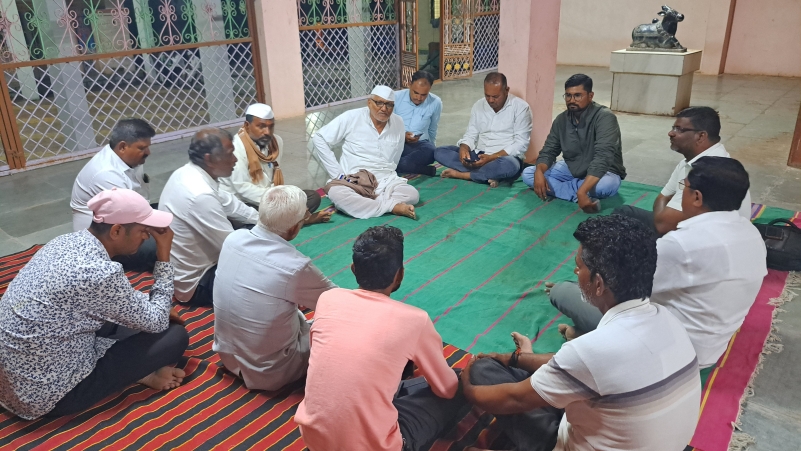
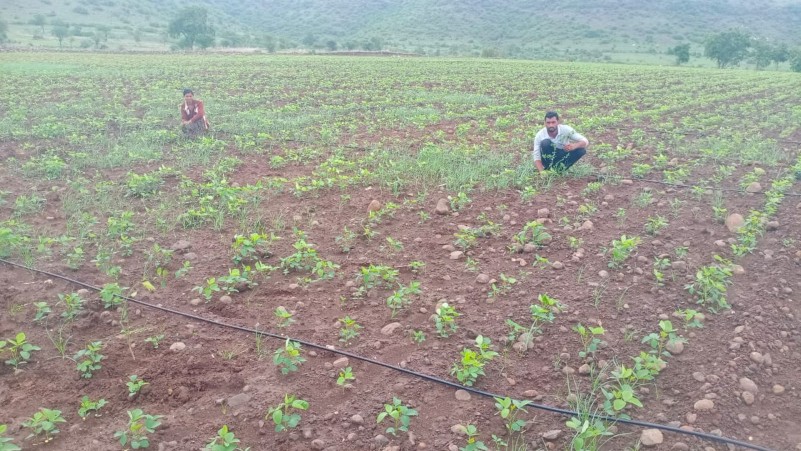
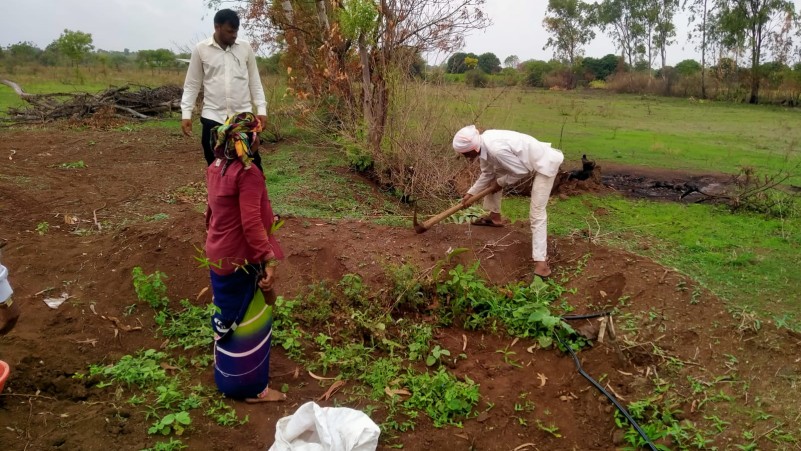
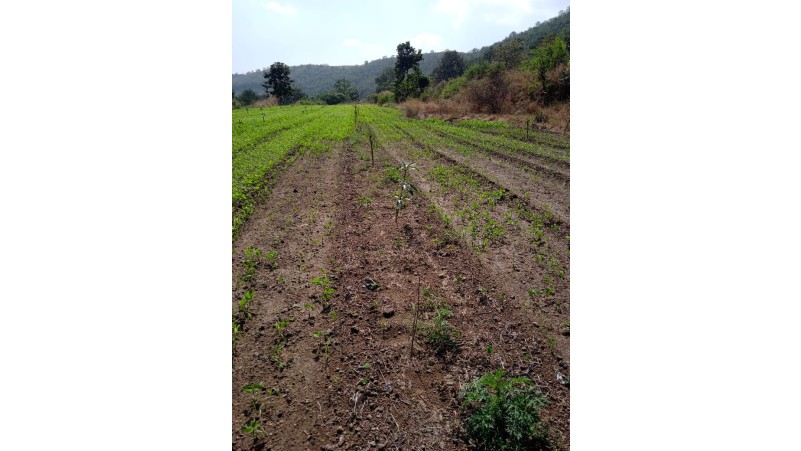
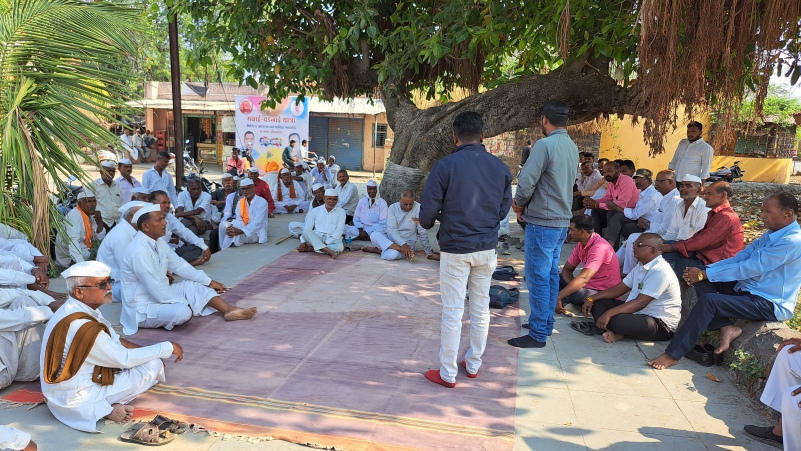
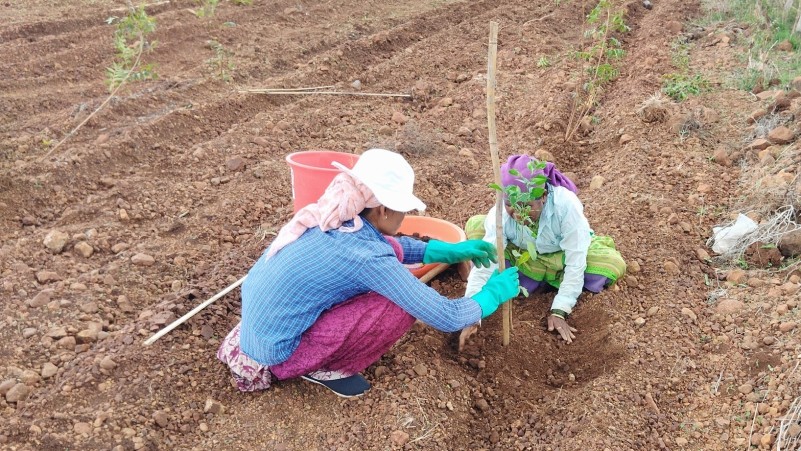
This project by Farmers for Forests (F4F) proposes to regenerate 200 acres of degraded farmland through a community-driven agroforestry model—a nature-based solution that blends ecological restoration with farmer-led livelihoods. The initiative will support 150 farmers in transitioning to climate-resilient land use systems that increase biodiversity, build income security, and sequester carbon over the long term.
Key impact highlights:
- 60,000 native, wild, and fruit-bearing trees (e.g., mango, custard apple, lemon, sweet lime) will be planted on degraded farmlands.
- 2,600 additional person-days of rural employment will be created through full-time and part-time roles in nursery management, plantation logistics, stakeholder engagement, and monitoring—many filled by local community members.
- Biodiversity per land parcel will increase from 2–3 to 8–10 species, promoting ecological stability and pollinator presence (list of trees provided in Annexure).
- Soil health will improve through organic inputs, increasing microbial and fungal diversity, nutrient retention, and productivity.
- 32,500 tonnes of CO₂ will be sequestered over 20 years—equivalent to removing 10,000 cars from the road.
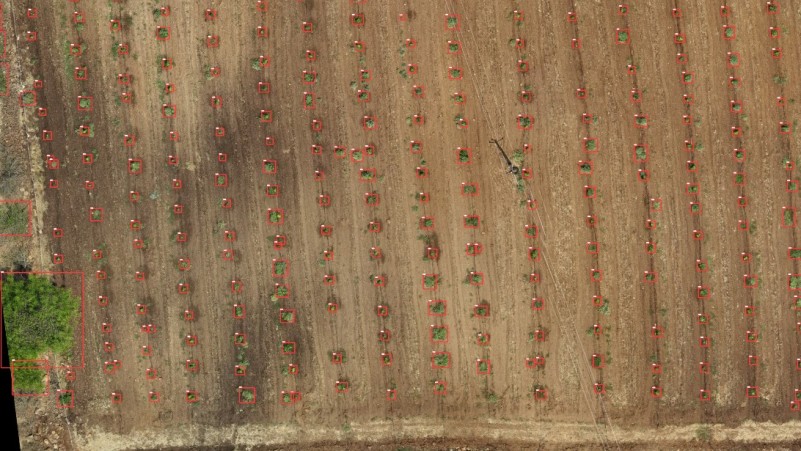
F4F applies a holistic, technology-enabled model for agroforestry that prioritises community ownership and data-backed impact. The year-long implementation involves farmer mobilisation, ecological planning, nursery support, drip irrigation, planting, and maintenance—backed by conditional cash transfers that incentivise survival-linked tree care. F4F’s proprietary AI-enabled drone system enables near real-time monitoring at the individual tree level, tracking survival, growth, and carbon data through multispectral imagery and analytics dashboards.
- F4F has successfully implemented similar agroforestry projects in water-scarce regions, using drip irrigation to ensure high survival rates. These interventions have improved biodiversity, soil fertility, and carbon sequestration while simultaneously boosting farmer incomes and financial stability. This experience forms the foundation for this new project, which is designed to be a scalable and replicable model for ecological restoration and rural economic resilience.
- This 200-acre intervention is part of a broader vision already underway across 5,000 acres, with plans to expand to 10,000+ acres. The project will be integrated into F4F’s existing Verra-listed carbon credit programme, with up to 80% of revenues reinvested into farmer-centric activities, ensuring financial viability and long-term community ownership.
- With measurable outcomes in soil health, biodiversity, employment, and carbon mitigation, this project is the first step towards a climate-resilient, inclusive rural development.
Context
India is grappling with a dual crisis of land degradation and climate change, with nearly 30% of its landmass degraded—threatening the well-being of over 500 million people who depend on agriculture and forestry. The impacts are particularly acute in semi-arid regions such as Jalna and Beed in central Maharashtra, and Belgaum and Hubli-Dharwad in northern Karnataka, where agriculture is predominantly rain-fed and highly climate-sensitive. The regions suffer from a range of developmental and climate–induced challenges, some of which are described below.
Developmental and socio-economic challenges:
- Land degradation: Beed and Jalna, part of the semi-arid Deccan Plateau, face severe soil erosion, depletion of organic matter, and declining soil fertility. Excessive use of chemical fertilisers and monoculture farming have compounded the problem. In Hubli-Dharwad and Belgaum, agricultural expansion has come at the cost of forest cover, further deteriorating land health.
- Economic vulnerability: In these districts, agriculture accounts for a major share of livelihoods, yet farmers face declining incomes due to reduced yields. The dependence on cash crops like cotton, sugarcane, and soybean exacerbates financial risks in the face of fluctuating market prices and adverse weather.
- Labour shortages due to youth migration – Widespread youth migration to urban areas in search of education and employment has led to labour shortages in rural agriculture, increasing the workload on aging and female-headed households. This migration, while economically aspirational, weakens the capacity of local communities to implement new agricultural practices or climate-resilient models at scale.
Climate-induced challenges:
- Erratic rainfall and droughts: Jalna and Beed receive low and unpredictable rainfall (500-800 mm annually), making them highly susceptible to droughts. In recent years, rainfall variability has led to crop failures, water scarcity, and food insecurity. Hubli-Dharwad and Belgaum, though receiving moderate rainfall, have faced frequent droughts, unseasonal rain, and extreme weather events.
- Depleting groundwater: Over-extraction of groundwater, coupled with reduced recharge due to deforestation and soil compaction, has made irrigation increasingly unsustainable. Beed, in particular, has seen groundwater tables drop drastically.
- Loss of biodiversity: India has lost over 90% of its biodiversity hotspots, and these geographies are no exception. Deforestation in Belgaum and Hubli-Dharwad has reduced the availability of pollinators like bees and birds, critical for sustaining agriculture.
- Frequent pest attacks: Rising temperatures and shifting rainfall patterns have increased pest infestations. In 2022, Marathwada (which includes Jalna and Beed) reported significant crop damage from pink bollworm infestations on cotton.
- Extreme weather events: Jalna and Beed have experienced increased frequency of droughts and erratic rainfall. Similarly, Belgaum and Hubli-Dharwad have faced challenges such as unseasonal rains and temperature fluctuations, leading to crop damage and heightened vulnerability for farming communities.
These compounding climate and socio-economic stressors are not isolated—they are systemic and escalating. As degraded soils become less productive and rainfall more erratic, farming is no longer a reliable source of income or nutrition in these regions. The absence of ecological buffers like tree cover and biodiversity further reduces the land’s ability to recover from shocks. The receding groundwater levels, increased deforestation and biodiversity loss mean that even when rains arrive, the ecosystem lacks the resilience to absorb and utilise it efficiently. Farmers are left with fewer options, shrinking margins, and heightened exposure to market and climate risks.
If current trends continue, these regions face irreversible ecosystem collapse and deeper agricultural and livelihood distress. By 2040, the nutritional value of staple crops like rice and wheat may become negligible, heightening the risk of malnutrition and food insecurity across India.
Proposed intervention
To address this intertwined crisis of ecological degradation and climate vulnerability in Jalna, Beed, Belgaum, and Hubli-Dharwad, this project proposes restoring of 200 acres of degraded land to community-led agroforestry systems. This area of land will be part of the bigger landscape approach. Compared to conventional farming, agroforestry offers a practical, climate-aligned solution rooted in the realities of these landscapes:
- Reversing land degradation and water stress: Native tree species integrated into farm systems will rebuild soil fertility, reduce erosion, and improve moisture retention—key to restoring productivity on degraded lands where rainfall is erratic, and groundwater is vanishing.
- Diversifying and securing farmer incomes: Agroforestry provides multiple income streams through fruit, fodder, timber, and medicinal plants, reducing reliance on a single crop and buffering against price and climate shocks—especially crucial in regions like Marathwada where cotton farmers have suffered major losses from droughts and pest attacks.
- Rebuilding local biodiversity and resilience: Mixed-species plantations will attract pollinators, stabilise microclimates, and offer natural pest control—helping regenerate ecological balance in areas like Belgaum, where deforestation has severely impacted farm productivity.
- Sequestering carbon and supporting climate goals: Tree-based farming enhances carbon capture while creating natural buffers against extreme weather—directly contributing to India’s climate mitigation and adaptation goals.
By anchoring restoration within farmers’ livelihoods, the project builds long-term resilience—turning degraded farmland into climate-smart landscapes that work for both people and nature.

Problem statement
Goals and objectives
Goal:
To create and conserve biodiverse farms and forests while making agroforestry financially viable for farmers and indigenous communities.
Objectives:
- Promote transition to regenerative agroforestry
- Identify farmers facing land degradation and support their shift to multi-layer agroforestry for better soil health and climate resilience.
- Enhance financial and technical access
- Guide farmers on optimal tree and crop selection using satellite data and soil samples.
- Provide access to saplings, seeds, bio-fertilisers, and drip irrigation at subsidised rates.
- Support financial access through government schemes and direct cash transfers.
- Improve soil health and water efficiency
- Promote organic fertilisers, leaf litter, and farm-made inputs like Jeev Amrut.
- Implement drip irrigation, reducing water usage by up to 80%.
- Increase biodiversity and carbon sequestration
- Develop agroforestry plots that support three times more biodiversity and attract more pollinators.
- Enhance natural carbon capture, sequestering four times more carbon than traditional farming.
- Generate sustainable revenue through carbon offsets
- Use drones, AI, and field data to measure biodiversity, soil health, and carbon sequestration.
- Monetise carbon offsets to fund farmer participation and scale agroforestry adoption.
This approach strengthens environmental resilience, enhances farmer livelihoods, and ensures sustainable agroforestry expansion.
About the organisation
Founded in December 2019, Farmers for Forests (F4F) is one of the few organisations in India working in the forestry sector and using a payment-for ecosystem services model for its environmental protection and restoration activities.
F4F was incubated at Mulago, Fast Forward, NSRCEL-IIMB, The Nudge Institute and Shakti – The Empathy Project. Our work has been supported by several organisations including Accenture, ACT Grants, Opus Software Solutions, Rainmatter Foundation and Rohini Nilekani Philanthropies.
F4F’s work also featured on DW TV and Scroll’s Eco India series as well as DW Hindi. We have also been selected as one of India’s top innovators working in the ecosystem restoration and conservation sector by the World Economic Forum.
 If you are a funder and want to know more about this project,log in or register now with us to get complete access.